Dust Explosion Info
Dust Explosion Information



















Characteristics of Dust Explosions
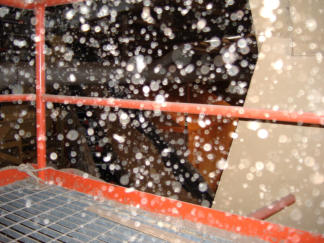
When a mass of solid flammable material is heated it burns away slowly owing to the limited surface area exposed to the oxygen of the air. The energy produced is liberated gradually and harmlessly because it is dissipated as quickly as it is released. The result is quite different if the same mass of material is ground to a fine powder and intimately mixed with air in the form of a dust cloud. In these conditions the surface area exposed to the air is very great and if ignition now occurs the whole of the material will burn with great rapidity; the energy, which in the case of the mass was liberated gradually and harmlessly, is now released suddenly with the evolution of large quantities of heat and, as a rule, gaseous reaction products.Explosive Concentrations
Although an intimate mixture of a flammable dust and air may burn with explosive violence, not all mixtures will do so. There is a range of concentrations of the dust and air within which the mixture can explode, but mixtures above or below this range cannot. The lowest concentration of dust capable of exploding is referred to as the lower explosive limit and the concentration above which an explosion will not take place as the upper explosive limit. The lower explosive limits of many materials have been measured. They vary from 10 grams per cubic metre to about 500 grams per cubic metre. For most practical purposes it may be assumed that 30 grams per cubic metre is the lower explosive limit for most flammable dusts. Though this may seem to be a very low concentration, in appearance a cloud of dust of such a concentration would resemble a very dense fog. The upper explosive limits are not well defined and have poor repeatability under laboratory test conditions. Since the upper explosive limit is of little practical importance, data for this parameter is rarely available. The most violent explosions are produced when the proportion of oxygen present is not far removed from that which will result in complete combustion. The range of the explosive concentrations of a dust cloud is not simply a function of the chemical composition of the dust; the limits vary with the size and shape of the particles in the dust cloud.Ignition of Dust Clouds
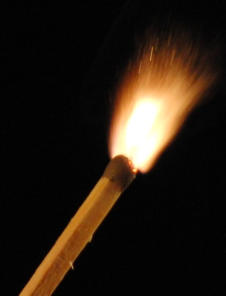
Although mixtures of dust and air within the flammable range are capable of explosion, they will not explode unless they are ignited in some way. Once a source of ignition is presented to the flammable mixture, flame will propagate throughout the cloud. The mode of ignition of a dust cloud is typically a hot surface, an electrical spark or a mechanically generated frictional spark - see ignition sources. The minimum condition necessary to initiate a dust explosion with certain modes of ignition can be measured and some results are listed below. Data is provided for comparison purposes only and must not be used for explosion protection design. Note: Figures for explosion protection design should be taken from explosibility testing of indicative samples. See dust explosion testing for details.Effects of a Dust Explosion
The heat produced by the combustion of the dust particles in a dust explosion and any gases evolved will cause a rapid increase in pressure at the walls of the vessel containing the dust cloud. In factories it is the effect of this pressure wave on relatively weak items of plant and buildings which has caused the deaths and injuries to persons employed in handling materials giving rise to dust explosions. Further, since the pressure wave produced by the explosion can cause further dust which may have accumulated in the plant or on internal surfaces of buildings to be thrown into suspension in air, additional fuel can be fed to the flame and a disastrous secondary explosion may follow - see photo left. Additional consequences following a dust explosion pressure wave are: the fires that may have been started by the dust flame; the implosion effect on the plant and buildings as the pressure within these rapidly returns to normal; the compromise of emergency exit routes and emergency lighting.
Conditions for
an Explosion
A dust cloud of any flammable material will explode where: 1 the concentration of dust in air falls within the explosive limits, and 2 a source of ignition of the required energy for that dust cloud is present. Conversely, an explosion can be prevented if one, or preferably both, of these conditions are avoided.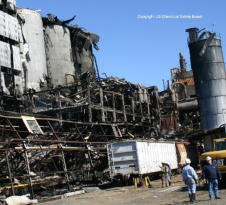



Dust Explosion Info
Dust Eplosion Info
Characteristics of Dust
Explosions
When a mass of solid flammable material is heated it burns away slowly owing to the limited surface area exposed to the oxygen of the air. The energy produced is liberated gradually and harmlessly because it is dissipated as quickly as it is released. The result is quite different if the same mass of material is ground to a fine powder and intimately mixed with air in the form of a dust cloud. In these conditions the surface area exposed to the air is very great and if ignition now occurs the whole of the material will burn with great rapidity; the energy, which in the case of the mass was liberated gradually and harmlessly, is now released suddenly with the evolution of large quantities of heat and, as a rule, gaseous reaction products.Explosive Concentrations
Although an intimate mixture of a flammable dust and air may burn with explosive violence, not all mixtures will do so. There is a range of concentrations of the dust and air within which the mixture can explode, but mixtures above or below this range cannot. The lowest concentration of dust capable of exploding is referred to as the lower explosive limit and the concentration above which an explosion will not take place as the upper explosive limit. The lower explosive limits of many materials have been measured. They vary from 10 grams per cubic metre to about 500 grams per cubic metre. For most practical purposes it may be assumed that 30 grams per cubic metre is the lower explosive limit for most flammable dusts. Though this may seem to be a very low concentration, in appearance a cloud of dust of such a concentration would resemble a very dense fog. The upper explosive limits are not well defined and have poor repeatability under laboratory test conditions. Since the upper explosive limit is of little practical importance, data for this parameter is rarely available. The most violent explosions are produced when the proportion of oxygen present is not far removed from that which will result in complete combustion. The range of the explosive concentrations of a dust cloud is not simply a function of the chemical composition of the dust; the limits vary with the size and shape of the particles in the dust cloud.Ignition of Dust Clouds
Although mixtures of dust and air within the flammable range are capable of explosion, they will not explode unless they are ignited in some way. Once a source of ignition is presented to the flammable mixture, flame will propagate throughout the cloud. The mode of ignition of a dust cloud is typically a hot surface, an electrical spark or a mechanically generated frictional spark - see ignition sources. The minimum condition necessary to initiate a dust explosion with certain modes of ignition can be measured and some results are listed below. Data is provided for comparison purposes only and must not be used for explosion protection design. Note: Figures for explosion protection design should be taken from explosibility testing of indicative samples. See dust explosion testing for details.Effects of a Dust Explosion
The heat produced by the combustion of the dust particles in a dust explosion and any gases evolved will cause a rapid increase in pressure at the walls of the vessel containing the dust cloud. In factories it is the effect of this pressure wave on relatively weak items of plant and buildings which has caused the deaths and injuries to persons employed in handling materials giving rise to dust explosions. Further, since the pressure wave produced by the explosion can cause further dust which may have accumulated in the plant or on internal surfaces of buildings to be thrown into suspension in air, additional fuel can be fed to the flame and a disastrous secondary explosion may follow - see photo left. Additional consequences following a dust explosion pressure wave are: the fires that may have been started by the dust flame; the implosion effect on the plant and buildings as the pressure within these rapidly returns to normal; the compromise of emergency exit routes and emergency lighting.Dust Explosion Properties

Material
Ignition
Temp
Minimum
Ignition
Energy
Lower
Explosible
Limit
Pmax
Kst
(
o
C)
(mJ)
(g/m
3
)
(bar)
(bar.m/s)
Aluminum
560
<1
60
11.2
515
Magnesium
760
>1000
30
17.5
508
Zinc
250
300
250
6.7
125
Cellulose
Acetate
520
30
9.8
180
Methylacryl
amide
500
100
30
8.7
97
Phenolic
Resin
460
9.3
73
Polyamide
460
>1000
125
6.9
38
Polystyrene
450
100
400
5.4
14
Urea
520
100
125
9.7
119
Cocoa
(dust)
60
7.6
75
Coffee
470
>1000
60
9.0
90
Cornstarch
400
10
30
8.2
107
Grain dust
510
125
9.2
131
Potato
(flour)
480
125
9.1
69
Sugar
480
10
100
8.5
138
Adipic Acid
580
60
8.0
97
Coal
540
>1000
60
8.5
117
Sewage
sludge
450
100
250
6.5
79
Sulphur
280
<1
280
6.8
151
Yeast
450
100
60
6.2
40

Dust Explosion Info © copyright 2020